Oh, Don!

In these days of high technology, people forget to spend time with each other, have conversations and create memories. Life isn’t so much about hashtags or followers but about who you follow and where they take you.

Just a few months back Jackie and I were out to breakfast distracting ourselves from the rather large and ominous elephant in her living room and having another one of our life-changing 2 hour chats on current events, philosophies and things that seem to matter most in life. It was then that she interrupted our stream of conversation with an observation that sounded like the steady push of a needle across a 45 record… “You know Don, this thing in my head is gonna be the death of me and everything I am.”

Rarely am I without words or at least a funny comeback, but after taking the pause we needed to finally turn this corner, I said, “Well yes and no Jake. It may indeed be the death of you but it will never be the death of who you are, were or will still be.” And that’s the moment she again smiled and said “Oh, Don” and asked me to speak at today’s memorial and to make it something inspirational because that’s what she was to so many of us, and inspiration is what I enjoy most in life. Conversations with Jackie were often my source material.

She’s been gone from us now for over a month during which time many things have crossed our minds about our own memories of Jackie since.  For me, it’s that little tremble in her voice when she would say “Oh, Don.” And I can hear it still like it was yesterday. It usually followed something I said that resonated, a joke we shared or some epiphany we stumbled upon while out day driving to nowhere in particular.

So in the spirit of Jackie, my words for you here today are about things and experiences.

She and I pondered this topic more than once and from afar, I’m certain she approves of this message.

When she had only months left we were talking about my own recent medical history and how I might not be very far behind her.  She asked me “How do you know when you’re ready, Don?” And of course, we spent another two cups of coffee speculating on the possible answers as if we knew them.

It’s no surprise that her cancer, of all opportunistic places, took hold of her brain. Cancer has a habit of stealing our most beautiful parts, and that seven pound diamond mine atop her neck always produced gems and wondrous moments. It was among her most stunning features.

Jackie was a question mark looking for life’s answers. She was self-examining and philosophical since the day we met 35 years ago all the way up to her quiet end last month. I visited her again the day she died, hoping for just one more conversation but she was already on the way out of this world into one better.

Rarely did we waste time on small talk or trivial matters. Our most memorable times together over the years were simple talks turned complex about everything and anything that seemed to matter in the world, and years back, ending in either decent answers after two bottles of wine or a good joke. And always that “Oh, Don!”

For Jackie, everything mattered and nothing was off limits. Ever. “I wonder if everyone considers the things we do” she would ask, when really she was hoping everyone did and enjoyed them as much as we did together.

And I think the most important question Jackie has now answered for herself might be the one we ask our own selves about the life we’ve been living. The pensive, internal things we think upon, ponder and discuss within ourselves and with those few we let in on the conversations.  Because those are what kept Jackie alive, took with her, and what she leaves behind for all of us. The important experiences, not the urgent things. For the things we grasp at the very end are never things.

The holidays now upon us once again with Veteran’s day this week, Thanksgiving next, followed by Christmas and the New year, all are laced with memories, traditions, those we love and those we loved, and others who still need to be.  We look forward to our celebrations with family and close friends, long talks and reminiscing around our fake fireplaces with real opportunities to gather our thoughts about life, friendships and what makes us tick and what matters most.

Jackie never missed these opportunities. Her favorite gifts were always memories and experiences.

We all will miss her at the fireplace, the table, the tree and our celebrations. What took her from us and took from her her most beautiful part has left us with fond memories and asks us all the question “What if I’m next? And what will I take with me?

Will you, like Jackie, leave this world for the next having fully examined the most important questions of life while you still have one? Will what you leave be bigger and more glorious than what you worked at for a living, where you vacationed, or things you own? Or will you leave the remnants of your thoughts and ponderances indelibly imprinted upon others to carry on that which is the most beautiful part within you?

You see, the things that accompany us over that lonely narrow bridge to the other side are never things. We won’t be grasping ceramic mementos or tchotchke but memories of those long conversations, words and experiences that mattered most while we lived. And for me they will certainly include Jackie’s beautiful trembling voice so many times when she would say to me,  “Oh, Don.”

An immodest proposal.

I have a modest proposal.

Let recovering drug addicts choose our leaders.

We are uniquely qualified for the task.
Having lived years of lies, deceit, thievery, skillful manipulation and faulty reasoning, recovering addicts are the most adept at smelling bullshit before it ever sets foot in a room or on a stage.

We’ve nothing left to lose because our addictions have taken it already. We’re impartial to the party, only to the raw revelation of honesty and good reason and we will go to any lengths necessary to find it in another. Our motto is “principles over personalities” and our goal is to see the emergence of integrity. We don’t acquiesce to emotional appeals or spins on the truth, but call them on the carpet. Our training was perfected while imprisoned, on the streets of selfish coercion, and usually both. Recovery has made all our secrets public with nothing left to hide or to hide behind and we understand what is freedom and what is not. We are all veterans of a war who walked away victors and are among the most vigilant combatants on behalf of others in the world.

We know the enemy because he is who we once were.

By nature, it takes a keen set of skills to become an addict and a ruthless pursuit of humility to escape from it. We know when someone’s under bad influence, on something, onto something, or just needs a few sobering days in jail. We let people be flawed and forgiven but not rescued.

We demand integrity in one another and are the first to recognize when it slips. We are accountable to no special interests but only to the power of the One higher and smarter than ourselves. And most importantly, we know that sometimes losing is winning.

This is my modest proposal.

My scarlet letter is a consonant

I find most single people my age have great disdain for the “single” label. It’s much like being a modern age Hester Prynne but wearing a consonant instead of a vowel.

The “S” word for some is a choice, but for most it’s a consequence of being too divorced, too busy, too preoccupied or some other convenient public excuse that stills all the inquiries and helps make socializing in a coupled world a little more bearable.

We go to “singles” groups and functions because that’s where we “belong,” only to find them uncomfortable venues with solo men and women in search of partners, willing to drop their standards to pair up or more often, hook up.

Perhaps that was an unfair generalization, but if you’re single you know what I mean.

I used to be the life of the party. My natural gravitational pull was always to groups over individuals. Socially savvy and interpersonally comfortable, I could easily engage an entire room with my wit and personality all night long. At some point, however, I either lost or abandoned those skills. Among other things, recovery from drugs enlightened me to the shallowness of being the center of attention and as a reaction formation, I probably swung the pendulum a little too far in the opposite direction instead of settling on a happy medium. Mental note: change that.

It started when I was divorced. When you’ve lived a coupled life, you develop coupled friendships and activities with other couples and often have more potential for social life than time on your hands. Suddenly single, the quake of divorce creates a giant, impassable crevasse between you and your former social life. Stranded on that cold, detached sheet of ice is an outflow consequence and the growing distance over time can become pretty lonely.

For instance, I went to a Halloween party last night. Though the place was fabulously decorated, the costumes incredibly ornate, the food, drink and music–perfect, I never felt more alone. Well, maybe not “never” if I were honest and a bit less dramatic (enhanced self-pity is another consequence of being alone most of the time with nobody around to keep it in check.)

It didn’t help the party was populated by high school friends I hadn’t seen in decades. People look a lot different now, even moreso in costume. For these two reasons alone, they might as well been complete strangers. I recognized very few except for those whose years or wealth had been particularly kind. My antisocial trifecta was completed by the fact I was quite obviously very single. Being single at a party like that, at least to the single mind, feels much like that scarlet letter. “He’s single? Must have been a bad divorce or else he’s gay or something else unpleasant about him.” In my case, you could make a case for all three, I suppose. But that’s how the single mind works, imagining thought bubbles over everyone’s heads to the point at which their popping sounds become deafening up until that moment you bolt because the last couple episodes of The Walking Dead and your dog have been patiently waiting for you to come home for at least 40 minutes now. Any remotely believable excuse for the host and hostess if you stay long enough to say good bye. I didn’t.

Single adults now make up more than half the American population. That’s a large, looming, lonely statistic. Us singles, however, still conceive of ourselves as the minority.

So I departed home to be socially extroverted on Facebook and other online locations where it’s safe to be single and the loneliness is controllable, fishing for likes as life partners over love in real relationships. I make lame attempts to belong by describing in detail and pictures the deep, meaningful relationship I have developed with my dog who would have loved to join me last night if I’d had a costume for him.

Sometimes I wish I was stupid and ignorant. But once a therapist, always a therapist. My training doesn’t allow escape from these moments of self-evaluation very easily. Don’t get me wrong, though. I write stories like this as a means of self-therapy and to educate, inform and inspire others who might have similarly single experiences.

I don’t walk around all day forlorn, feeling sorry for myself, or prowling for a partner. Like most who wear the “S,” there are aspects of singleness I greatly enjoy. I don’t feel entirely incomplete or unfulfilled, just a bit lonely at times observing happy couples who have grown together for many years with someone to hold at night and talk about nothings as if they were somethings.

Though I should know the answers to these musings, admittedly, I do not. I’ve tried unsuccessfully to make more convenient, spontaneous friends to join me on outings like these as I don’t often fare well in these social misadventures alone, however the invitations to them alone are a balm I enjoy perhaps more than attending the event itself. For the uncoupled, it feels good and “normal” to occasionally be wanted, desired and invited.

I don’t drink. Or better said, I don’t drink very well. My effort to stave off the growing desire to bolt from the party earlier than I did, meant quickly downing two vodka tonics in an attempt to loosen me up for an engaging conversation with nobody at my table. All I got was sleepy and a pounding headache at 4am the morning after. As a recovering drug addict, I’ve no business drinking but it’s never been my drug of choice and they weren’t serving bowls of meth at the bar. Neither alcohol nor drugs are ever a solution to this internal problem. I’m intimately aware of this. But the desire to stay just a little bit longer hoping I could make these feelings pass was so strong, I was prepared to do anything just to last another half hour.

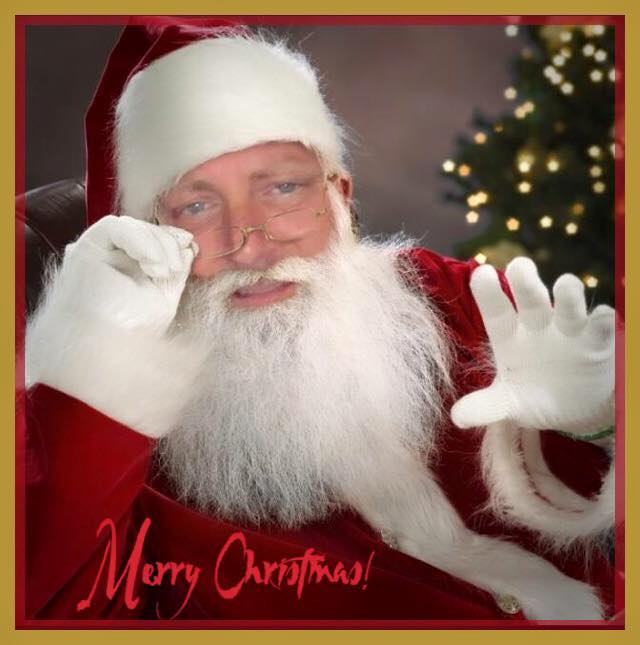
I dressed as Santa Claus first because I had the costume on hand and second, because my extra weight could be masked as part of the costume. There, I admitted it. For the most part, I genuinely like myself and who I’ve become as an uncoupled man. I recognize I probably would have never created such a mess of my life nor enjoyed the fruits of life changing recovery had I remained coupled. So in that regard, singleness has been a blessing.

Well, I’m pleased to report that my splitting headache from that pair of vodkas has mostly subsided and I’m feeling pretty good about today, being a single man on a Sunday morning. Sundays are always a reminder that while I may be lonely, I’m never really alone and that Hester Prynne never deserved to wear a scarlet vowel nor I a scarlet consonant.

there was a time

There was a time when peoples’ politics defined much of who they were—morals, character, virtues, fund of knowledge, their understanding of complicated world events and their personal empathies. Their beliefs weren’t always agreeable but were at least well-defended by deep roots and informed convictions.
Disagreements were conversation points revealing sharp differences yet with respect for the other person and a craving for depth and understanding of their opposing view.
Discussions were exited without driving wedges or assaults on character. They were deliberate, There was a time when peoples’ politics defined much of who they were—morals, character, virtues, fund of knowledge, their understanding of complicated world events and their personal empathies. Their beliefs weren’t always agreeable but were at least well-defended by deep roots and informed convictions.
Disagreements were conversation points revealing sharp differences yet with respect for the other person and a craving for depth and understanding of their opposing view.
Discussions were exited without driving wedges or assaults on character. They were deliberate, genuine attempts at bridge building though neither one might admit it in the moment.
To understand another’s fundamental politics was a desire to understand the entirety of the person. Conversations weren’t punctuated by sound bytes, innuendo or irrelevant periphery. They weren’t permitted hiatus on vague or shallow arguments and were always less about the party and more about the mind and heart of the person.
The end game was to evolve new ideas and solutions for all rather than digression into single issues of personal preference with feet dug in.
They embraced ‘what-ifs’ not as threats but as the creative bridges they were and ‘why-nots’ as opportunities to lay new stones for a unifying path, not for casting at one another across their divide. Indeed, they were dialogues of dream-builders engaged in the pursuit of a better life, a better world and prosperous opportunity for the all versus the one.
It was a hot day in August 56 years ago when a man spoke “I have a dream” and unified a sharply divided nation of a lesson it had yet to learn. That dream can still come true in this polarized world if people want it bad enough. Meaningful change waits for those who firmly grasp the fact that under the veneer, what we all want has more in common than not, and in many ways, is much the same thing.
genuine attempts at bridge building though neither one might admit it in the moment.
To understand another’s fundamental politics was a desire to understand the entirety of the person. Conversations weren’t punctuated by sound bytes, innuendo or irrelevant periphery. They weren’t permitted hiatus on vague or shallow arguments and were always less about the party and more about the mind and heart of the person.
The end game was to evolve new ideas and solutions for all rather than digression into single issues of personal preference with feet dug in.
They embraced ‘what-ifs’ not as threats but as the creative bridges they were and ‘why-nots’ as opportunities to lay new stones for a unifying path, not for casting at one another across their divide. Indeed, they were dialogues of dream-builders engaged in the pursuit of a better life, a better world and prosperous opportunity for the all versus the one.

It was a hot day in August 56 years ago when a man spoke “I have a dream” and unified a sharply divided nation of a lesson it had yet to learn. That dream can still come true in this polarized world if people want it bad enough. Meaningful change waits for those who firmly grasp the fact that under the veneer, what we all want has more in common than not, and in many ways, is much the same thing.


my fifty cents

The young man was seated in the sun on the curb outside when he asked “Sir, could I wash your windows for 50 cents?” In a hurry to get my iced tea I said “No, thanks” and walked in the store. The length of the line was consuming my valuable lunch hour until I noticed the disabled woman at the front of the line was 35 cents short. The cashier asked “Well, do you have the 35 cents lady?” Six handfuls of coins reached out from our line to her in sync—everyone wanted to help, not to move the line along faster, but to genuinely help. Humbled but embarrassed by our corporate act of kindness she declined our offers, took her loss and he closed the register, urging her scooter to get along. “Next.” We each waited for our turn at transacting and eventually, my four iced teas came to precisely $4. Change from my $5 bill, I kept the dollar in hand as I exited the store thinking how just minutes before, I’d turned down a 50 cent window wash from a man who wanted to work for it, but gladly forked over four dimes for someone who couldn’t. It was one of those weird serendipity moments of humanity that cost me nothing but a cold iced tea wrapped in a dollar bill to a guy who needed it a lot more than me.
We all learned a lesson at lunchtime that day.

HopeCanChangeEverything

[If there’s one thing addicts do well, it’s telling stories. But after 8 years clean, they’re usually not lies anymore. Tonight at my meeting, I’ll share the key of how I did it once again as I do each year on this day.]

Someone asked me recently how I did it. How I got off drugs, meth of all things. Undoubtedly tonight at my meeting I’ll be asked once again as is the tradition for anyone getting another annual chip. My eighth.

I’ve given a lot of thought to the question. Less to the mechanics of my leap into sobriety, but more about which of my words might just trigger another addict in attendance to turn on that light upstairs, illuminating them to the possibility that they, too, deserve a future.

You see, it’s not so much the quitting of drugs that’s important. It’s the installation of hope that you are worth far more in this world than the lonely company of any drug or its cohorts. It’s about having been utterly blinded by the stupor of a drug and its false promise of contentment that blocks out hope or vision there’s really anything more to life. To that end, we are all addicts. We all have something we’ve allowed to remain which blocks our hope and blurs our vision. Something to which we remain bound.

“Clean and sober.” It’s almost cliché these days.
The distinction between the two, however, is perhaps the most important thing I learned in my years of recovery so far. I got clean once, but I get more sober with each passing day.

The truly recovered are not recovered at all. They are recovering. And the truly recovering can instinctively tell the difference. A recovering person hasn’t simply stopped using, they have started living. It’s evident that a clarity of mind, purpose and a place for God was birthed at some moment, but rarely is that moment a single epiphany, but the commencement of lifelong epiphanies which, strung together, create the continuity of recovering.

It’s the high I get from my ongoing little epiphanies of life these days. They continue to escort me down a much more beautiful path. And when you find yourself in a much prettier place, hope is much easier to find. In fact, it seems to find you.
And isn’t that really the definition of God?

So for the addicts in all of us, I say to you, we are here in this world for one reason only: Be that hope for someone today. Be clean. Be sober. And most of all, live like you deserve to.

That’s my story and I’m stickin’ to it.

among us

Some people don’t know when to stop.
They offer without an ask, buy before a need, don’t give or take no for an answer and expect nothing in return. They world’s not their oyster, but rather their responsibility. Their gifts are for more than just holidays, life is their only prize and they consider each new morning a personal canvas for their fine art of being human. They create masterpieces in secret for needy people they’ve never even met and surprise unsuspecting strangers from their bottomless benevolent hearts. They neither demand nor expect the same for themselves living by intuition, conscience, faith and opportunity. Their deeds are oft mistaken for angels and tiny pieces of heaven on earth, which of course, they are. They know no different and don’t know when to stop because indeed, this is what they were wonderfully made to do.
And someday. when you meet one, they will either change your life forever or inspire you to follow.

the best medicine

We now have compelling evidence people need more to survive in this world than food, water and shelter. If these findings are true, Maslow will need to amend his hierarchy, science its premises, and boardrooms around the globe will rewrite employee manuals to embrace this new 4th force.  The food pyramid, the flow chart, Venn diagrams, dietary labels, nothing will be sacred going forward.

In huge numbers, people are dying to laugh.

Save yo wife, save yo children, malnutrition of the funny bone isn’t funny. It’s the new killer and literally, no joking matter. High stress diets deficient in humor cause pile ups of 150 million viewers on YouTube watching silliness in action. Countless workplace millions daily risk it all for a bellyful of breakroom laughter behind closed doors while cutting their cheese.

It’s time to come out.

HR departments take notice. A laugh at work beats a tiny raise hands down. Scrolling masses bring daily side dishes of lunch room giggles to share with equally afflicted coworkers and the sick are again discovering the healing truth that laughter is indeed, the best medicine.

Since the 50s, researchers have known that three episodes of I Love Lucy are more effective than a shaker full of Prozac. People everywhere are dying to laugh.

So if it seems life is a joke these days, the remedy before us is also within us, with equal access for gay, straight, transgendered, transfigured, and those who just deserve the right to pee in the stall of their choice.

So rise up, raise your memes, post your funnies and someone call an emergency summit to permanently revise the hierarchy so we can finally Make America Laugh Again.

We can’t survive without humor, the new 4th force.

(Share this post six times and Jesus will send you four million dollars and a kitten.)

the stranger

[Once was not enough and twice was already too late. Eight years lost was an entire lifetime. Now almost seven off Meth, this is how I roll. If you know an addict or you are one, don’t wait to take that first step.]

In just the right place, at just the right time,
He caught my eye and called me.
“I’d like you to meet a friend of mine.
He really needs somebody.”

He said “I kinda need some help.
I’m wondering what you got.
I haven’t much, but three days clean
But for me that’s quite a lot.”

I said, “What’s up, my name is Don,
I’ve been where you are too,
I should be gone to prison
But today I’m here with you.”

We spoke the language addicts do
And quickly made a bond
He asked me how I got this far
I said “No magic wand.”

New on the scene and over zealous
He was hardly apprehensive,
Wanting one more day, and of me jealous,
Scared and aptly pensive.

I said “Advice?” He said “For sure!”
So I went on to tell him
“For what you got, there ain’t no cure”
I had no line to sell him.

He listened to my story.
He feasted on each word.
Ravenous and hungry
For all that he had heard.

I wished him well and shook his hand
He countered with a hug.
Then thanked me for my sincere words
Which had spared him from the drug.

And at just the right place and at just the right time,
Years later, less in danger
That friend I’d met with a story of mine
Was asked to help a stranger.

Hitting the bullseye, not just the target.

If I’ve learned anything working nonprofit: don’t just ask for money when you can ask for more.

This is Las Vegas. There’s plenty of money and more people able to give more than most.  Shame on the notion of the “ask” as a “necessary evil” in any relentless fight to help those less fortunate to succeed.  Rightfully, asking is a privilege, if it’s the last thing you do. Those who just ask for money get only money.  It’s not a bad thing, just a very incomplete one.

Tell real stories, show real results, demonstrate the change in the world made with a buck or a million of them, and do it in such a way that requires no scrutiny but can stand up to the sharpest.  Appeal to souls in ways that both prick hearts and consciences while evidencing purpose, value and integrity. Not an easy task, but worth far more than a dollar if you’re able.

This is Las Vegas. People here–more than in most cities–want and need to believe in something real and to be a real part of it.  Vegas proud and Vegas strong, they want to know their time and money will make verifiable change in lives of those needing it most.  Show you know how to use their money, vet the recipients with wisdom, think long-term, and make real change on their behalf in exchange for their generous contribution.

If all you do is ask for money, you can hit the target but miss the bulls-eye. Capture minds first, hearts second and leave the wallets for last, and they’ll take care of themselves.  Vegas people gladly and sacrificially invest in works and visions which promise and actually deliver real and valuable change in the community.  Persuaded of a cause that’s real and genuine to believe in and Vegas always steps up to the plate with open wallets, purposes and unbridled hope.

And God knows, hope is far more valuable than money.