For no immediately apparent reason beyond having some free time on my hands, I did a weird thing.
I took inventory of all the stuff I’ve allowed into my mind over these many years.
Thoughts, ideas, images, considerations of good and evil, and the unspeakably secret. The worries, hopes, dreams, and beliefs that have consumed so much nogginmatter—complete with smiles, sweat, tears, and all.
I do this kinda thing every so often. It’s a remarkably efficient way to rein in my pride and ego whenever I’m inclined to think a little more of myself than the evidence supports.
A real humility builder.
The list was long. Really long. And while it held plenty of recollections of things good, noble, and clean, the dirt, filth, and sewage occupied an uncomfortable amount of space.
As a man thinks, so his heart shall be. Proverbs 23:7. Your thoughts shape who you are.
What we entertain in our minds eventually finds expression in our words, our choices, and the way we treat those around us. Even the thoughts we keep secret rarely remain without consequence.
Fortunately, much of my sewage comes from years long past and has long since been forgiven. I don’t need to drag it all back out to punish myself, but remembering what once occupied my mind helps me recognize what I’m still allowing in.
Some old grievances have enjoyed free room and board long enough. Some worries have taken far more than their share. And some things good, noble, and clean deserve considerably more space.
Changing the way we think can change how we see the world, how we live in it, and what we contribute to the lives around us.
Weird? Yes.
But I think it’s worth taking inventory once in a while—to purge what pollutes, renew what’s been neglected, and redirect the trajectory of the mind.
Finally, brethren, whatsoever things are true, whatsoever things are honest, whatsoever things are just, whatsoever things are pure, whatsoever things are lovely, whatsoever things are of good report; if there be any virtue, and if there be any praise, think on these things. Phillipians 4:8
I find that many single people my age have a particular disdain for the word single.
It’s a little like being a modern-day Hester Prynne, except our scarlet letter is a consonant instead of a vowel.
The dreaded S.
For some, singleness is a deliberate choice. For others, it’s the unintended consequence of divorce, disappointment, demanding careers, or simply growing accustomed to a life that no longer includes someone else.
We offer convenient explanations, rehearsed well enough to discourage further inquiry and make navigating a coupled world a little more bearable.
We attend “singles” groups and functions because that’s supposedly where we belong, only to discover that sharing a marital status doesn’t necessarily mean sharing much of anything else.
Some are searching for lifelong companionship. Others are searching for considerably shorter commitments. And still others, like me, aren’t entirely sure what we’re searching for, but suspect we’ll recognize it when we find it.
Perhaps that’s an unfair generalization, but if you’re single with a capital S, you probably understand.
I used to be the life of the party.
My natural gravitational pull was always toward groups rather than individuals. Socially confident and interpersonally comfortable, I could engage an entire room with wit, conversation, and personality well into the night.
I could work a room like a politician in an election year, except I wasn’t asking for votes.
Somewhere along the way, I either lost those skills, abandoned them, or simply grew tired of performing.
Probably all three.
Recovery from drugs taught me, among many other things, how shallow the relentless pursuit of attention can be. I began recognizing the difference between being entertaining and being genuinely connected to others.
Unfortunately, in correcting one extreme, I may have swung the pendulum a little too far in the opposite direction.
The fellow who once couldn’t stand to be alone in a room now sometimes can’t stand being in one with everybody else.
These days, I’m a single man, a bit of a loner, and considerably more introverted than anyone who knew me years ago would believe.
Much of that transformation began with divorce.
When you’ve lived a coupled life, you naturally develop coupled friendships. Your calendar fills with dinners, holidays, parties, vacations, and gatherings with other couples. There are often more social opportunities than hours in the week.
Then, suddenly, you’re single.
Divorce doesn’t merely divide a marriage. It can divide an entire social universe.
Friendships once shared become awkward to maintain. Invitations dwindle. Traditions disappear. Nobody necessarily intends to exclude you, but the dynamics have changed, and you’re no longer quite sure where you fit.
It’s as though an earthquake has opened an enormous crevasse between you and the life you once knew.
Everyone else seems to remain comfortably gathered on the other side while you stand alone on your own little sheet of drifting ice.
And the distance grows.
Which brings me to a Halloween party.
It was a magnificent affair.
The house was fabulously decorated, the costumes were elaborate, the food and music nearly perfect, and the hosts had clearly gone to extraordinary lengths to make everyone feel welcome.
And I had rarely felt more alone.
Well, perhaps not rarely. That might be a touch dramatic.
Exaggerated self-pity is another occasional consequence of living alone. There’s nobody around to roll their eyes and tell you to knock it off.
Making matters worse, the party was populated largely by high school friends I hadn’t seen in decades.
People look remarkably different after forty or fifty years.
Put them in elaborate Halloween costumes, and you’ve effectively eliminated whatever chance you had of recognizing them.
I knew almost nobody.
Those I did recognize were generally the fortunate souls upon whom time, genetics, or accumulated wealth had been particularly generous.
Everyone else might as well have been a complete stranger.
And then there was the final ingredient in my antisocial trifecta.
I was, quite conspicuously, single.
Not merely unattached.
Single with a capital S.
In my increasingly self-conscious imagination, that scarlet consonant was practically glowing on my chest.
I could almost read the imaginary thought bubbles floating above the heads of the happily coupled guests.
“He’s single? At his age?”
“Must have been a terrible divorce.”
“Maybe he’s gay.”
“Perhaps there’s something else wrong with him.”
In my case, I suppose someone could make an argument for all three, depending on how creative they wanted to get.
Of course, nobody actually said any of those things.
They were probably far too occupied enjoying themselves to give my marital status a second thought.
But that’s how an insecure single mind can operate.
We manufacture other people’s judgments, assign them imaginary voices, and then suffer the indignity of believing every word.
Before long, the thought bubbles were popping so loudly in my head that I could barely hear the music.
I began calculating my escape.
Surely I’d stayed long enough to be polite.
Surely my absence wouldn’t be noticed.
Besides, there were a couple of unwatched episodes of The Walking Dead waiting at home, along with a dog who had undoubtedly begun wondering whether I’d been eaten by zombies myself.
The dog, at least, would be delighted to see me.
I left.
Without saying goodbye.
Not exactly the grand exit of a former life-of-the-party fellow, but I suspect nobody noticed the missing entertainment.
The irony wasn’t lost on me.
I had spent years learning how to be comfortable in my own skin, only to discover that I could still feel profoundly uncomfortable wearing it in a room full of people.
And there I was, retreating from actual human companionship to the safety of Facebook, where I could be socially extroverted without the inconvenience of being physically present.
Online, I could still be witty, engaging, thoughtful, and entertaining.
I could carefully compose my thoughts, select my photographs, and enjoy the reassuring little affirmations of people who apparently liked me.
A few dozen likes could momentarily substitute for the companionship I’d just fled.
It’s an odd arrangement, isn’t it?
We sometimes trade opportunities for genuine connection for the comfort of being noticed from a distance.
And if all else fails, I can always post another heartfelt tribute to my dog, complete with photographs documenting the profound emotional bond we’ve developed.
He would have loved the Halloween party, by the way.
I just didn’t have a costume for him.
Sometimes I wish I were a little less introspective.
A little more blissfully ignorant.
But once a therapist, always a therapist.
Years of training and practice have left me with an annoying inability to experience an ordinary social disappointment without mentally dragging myself onto the couch for an unsolicited session.
I can identify the defense mechanisms, recognize the distorted thinking, trace the emotional history, and explain the behavior with considerable professional confidence.
And still do it all over again.
Knowing why you behave a certain way, I’ve discovered, is not the same as knowing how to stop.
Writing stories like this has become a kind of self-therapy. I put the uncomfortable things into words, hoping that by examining them honestly, I might understand them a little better.
And perhaps someone else, quietly wearing the same scarlet consonant, will recognize a little of themselves.
Don’t misunderstand me.
I’ve grown up.
I don’t spend my days wandering around forlorn, feeling sorry for myself, or prowling the neighborhood in search of a partner.
There are many things about being single that I genuinely enjoy.
I appreciate my independence, my solitude, my freedom to arrange a day without consultation, and the quiet pleasures of a life that belongs entirely to me.
I’m not desperately unhappy.
I’m not incomplete.
I’m not waiting for someone else to arrive and make my life worthwhile.
But I do get lonely.
Sometimes unexpectedly.
Especially when I observe couples who’ve spent decades growing older together, sharing histories, weathering disappointments, and collecting memories that belong to nobody else.
There’s something deeply appealing about having someone beside you at the end of an ordinary day.
Someone who knows the stories behind your stories.
Someone with whom you can discuss absolutely nothing and somehow make it feel like everything.
Someone who knows when you’re being ridiculous and loves you enough to say so.
I’ve tried, with mixed success, to develop the kind of spontaneous friendships that make an occasional dinner, movie, or party feel natural rather than like an expedition into unfamiliar territory.
But friendships in later life don’t always develop as effortlessly as they did when we were young.
People have spouses, families, routines, obligations, and established circles of friends.
It’s not that there’s no room for one more.
Sometimes it’s simply that nobody thinks to make room.
And here’s something I’ve come to understand about invitations.
For those of us living uncoupled lives, the invitation itself can mean more than the event.
Being remembered matters.
Being included matters.
Knowing somebody thought of you while making plans matters.
Sometimes it’s enough just to know you were wanted there, even if you ultimately decide to stay home.
Because being single isn’t necessarily about wanting someone to love.
Sometimes it’s simply about wanting to know you haven’t become invisible.
I thought about all of this the morning after that Halloween party.
There was something almost comical about having spent Saturday night surrounded by ghosts, goblins, witches, and assorted monsters, only to realize that the most frightening thing in the room had been my own imagination.
Nobody had rejected me.
Nobody had asked me to leave.
Nobody had pinned a scarlet S to my chest.
I’d done all of that myself.
And perhaps that was the most uncomfortable revelation of all.
I’d gone to a party expecting to feel like an outsider, and then interpreted nearly everything around me as confirmation that I was one.
I had become both the accused and the judge.
And I’d convicted myself before the evening had even begun.
Sunday morning arrived, as it always does, with a little more perspective.
I was still single.
Still living alone.
Still occasionally wishing there were someone with whom to share the small, inconsequential moments that make up most of a life.
But I was also reminded of something far more important.
Loneliness is a feeling, not an identity.
Being alone is a circumstance, not a character flaw.
And singleness is a description of a relationship status, not a measure of a person’s worth.
Hester Prynne was made to wear her scarlet A so the world would know what she had supposedly done wrong.
I had been wearing my scarlet S so the world would know what I imagined was wrong with me.
The difference, of course, is that nobody had sewn mine onto my clothing.
I’d been carrying it around in my own head.
And unlike poor Hester, I could take mine off whenever I chose.
That Halloween party reminded me how easily we can become prisoners of labels, particularly the ones we give ourselves.
And that Sunday morning reminded me of something else.
Though I may sometimes be lonely, I am never entirely alone.
My faith assures me of that, even when my feelings suggest otherwise.
There is a difference between being without a partner and being without love. A difference between having an empty chair beside you and having an empty life.
I’ve been blessed with far too much of the latter’s opposite to confuse the two.
So perhaps the next time I’m invited to a party, I’ll stay a little longer.
Maybe I’ll introduce myself to a stranger.
Maybe I’ll stop imagining what everyone else is thinking and give them an opportunity to tell me.
And maybe, just maybe, I’ll remember that I was invited because somebody wanted me there.
Not as half of a couple.
Not as a prospective partner.
Not as a man with a complicated past or an uncertain future.
But simply as myself.
After all, Hester Prynne never deserved the shame of her scarlet letter.
“If a widow has children or grandchildren, they should learn first of all to put their religion into practice by caring for their own family and so repaying their parents and grandparents, for this is pleasing to God.” 1 Timothy 5:4 NIV
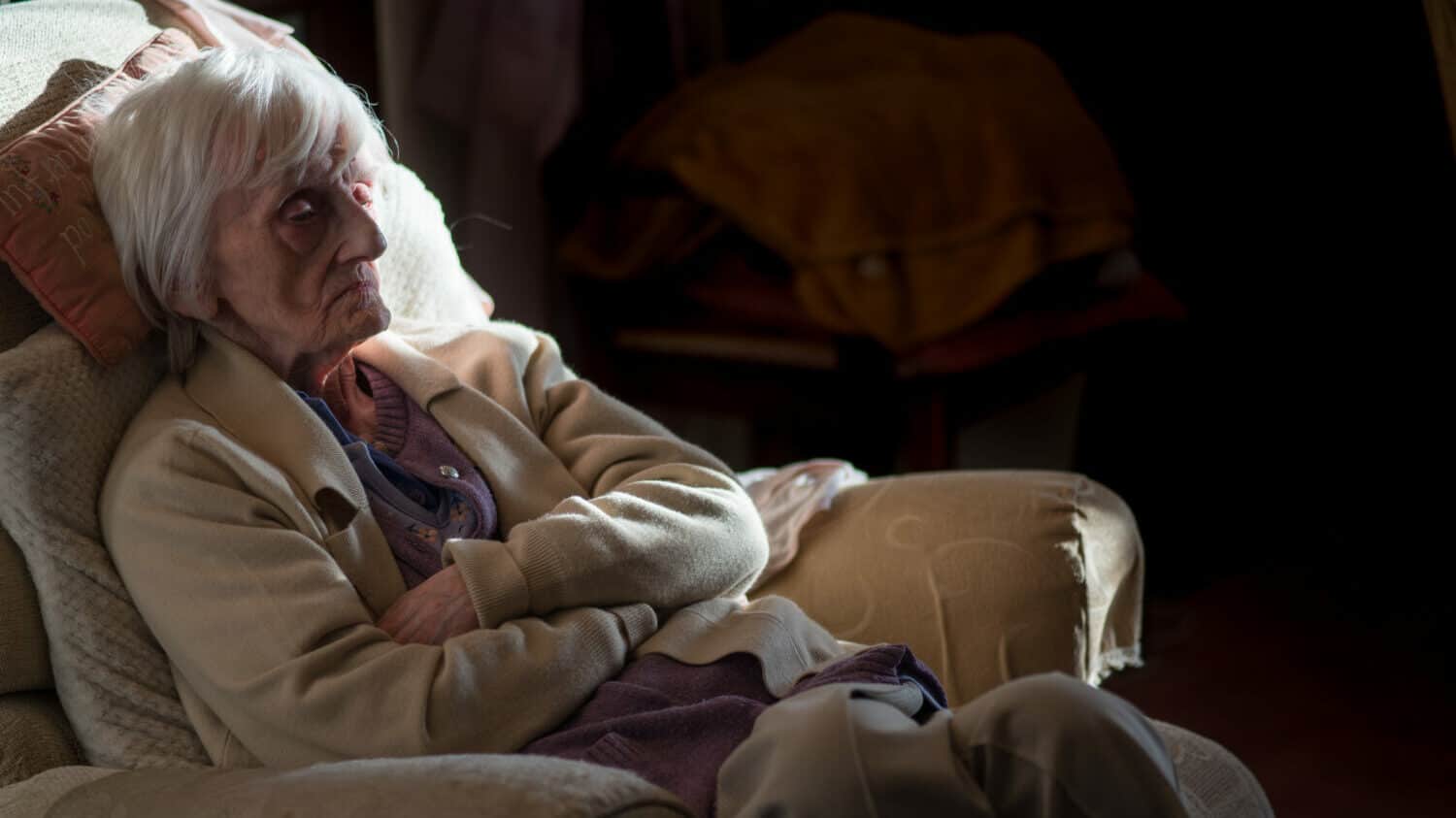
Abandonment of the elderly is widespread in our nation and nearly unheard of in many others.
The fact that Scripture even addresses it tells us the problem is nothing new. Apparently, neglecting those who once cared for us has been a human failing for a very long time.
Years spent helping seniors survive—and, whenever possible, thrive—have sometimes left this warm heart cold and bitter.
I have watched families deliver Mom, Dad or Grandma to assisted living like a package left at the doorstep, then disappear into lives apparently too busy to return.
If you’ve followed me for any length of time, you’ve read my stories. I have been the only “family” present for Thanksgivings, birthdays, hospital stays and funerals. I’ve tracked down distant relatives more times than I care to remember, following trails of unanswered emails, disconnected phone numbers and people who simply did not want to be found.
For 11 years, I had the privilege of working alongside people who cared deeply and routinely went the extra mile for a generation very close to my heart—and sometimes painfully far from the hearts of those who should have been closest.
Scripture doesn’t describe caring for our elders as a sentimental gesture. It calls it putting our faith into practice. It is repayment of a debt of love. And God says it pleases Him.
If you still have a parent or grandparent, call them. Visit them. Sit longer than is convenient. Listen to the story you’ve already heard 20 times. Sacrifice something from your busy present for someone whose remaining tomorrows are growing fewer.
One day, if God grants us the years, we will become the old, the feeble and the infirm ourselves.
And perhaps one of the most sobering measures of the lives we lived will be whether someone learned from us that the elderly are not burdens to be managed, but treasures to be honored.
There was a time when a person’s politics revealed much about who they were—their morals, character, virtues, knowledge, understanding of a complicated world, and capacity for empathy.
Their beliefs weren’t always agreeable, but they were at least well-defended, with deep roots and informed convictions.
Disagreement was an invitation to conversation. Sharp differences could exist alongside respect for the other person and a genuine curiosity about how someone intelligent and decent could arrive at a conclusion so different from your own.
You could leave such a conversation unconvinced, even more certain of your own position, without leaving enemies.
In their best form, those conversations were deliberate attempts at bridge-building, though neither person might have admitted it in the moment.
To understand another person’s politics was to try to understand the entirety of the person—the experiences that shaped them, the principles that anchored them, the fears they carried and the future they hoped to see.
Conversations weren’t punctuated by sound bites, innuendo, insults or arguments from the periphery. Shallow answers invited deeper questions. It was less about defending a party and more about discovering the mind and heart of the person sitting across from you.
The end game wasn’t simply to win. It was to test ideas against one another and perhaps discover something neither person brought to the table alone.
“What if?” wasn’t a threat. It was a bridge.
“Why not?” wasn’t surrender. It was an invitation to lay another stone in a path two people might someday walk together.
At their best, these were conversations among dream-builders—people pursuing a better life, a better country, a better world and greater opportunity for all rather than victory for one.
Maybe meaningful change begins again when we remember something remarkably simple:
Beneath the labels, parties, arguments and noise, most of us want many of the same things.
To be safe. To be free. To provide for the people we love. To be treated fairly. To have our voices matter. To leave our children something better than we inherited.
We may profoundly disagree about how to get there.
But recognizing that we are often arguing over different roads toward surprisingly similar hopes might be the first stone in rebuilding the bridge.
“One of those days Jesus went out to a mountainside to pray, and spent the night praying to God.” —Luke 6:12
I have the attention span of a toddler.
Rarely can I offer a focused prayer beyond 10 minutes at a time before I either lapse into a deep sleep or become accosted by the day’s intrusive thoughts.
Though we all may agree the highest and best use of our time is that spent in prayer to our Creator, the fight to maintain it always ends in frustration.
And then I read that Jesus prayed all night.
I can barely imagine it.
But perhaps the lesson isn’t that I should feel guilty because I can’t pray like Jesus.
Perhaps it’s that even Jesus, with all that awaited Him, considered uninterrupted time with His Father worth seeking.
I keep trying.
Ten minutes at a time if that’s what I have. A sentence when that’s all I can manage. A whispered “help me” when words fail altogether.
Because prayer is no test of endurance.
It is relationship.
And I suspect God would rather have His distracted child keep coming back to Him than have him stay away because he thinks he isn’t very good at praying.
Every 10 years, almost like clockwork, you can find me working the registration table at the Clark High School Class of 1976 reunion.
The funny part is, I only went to Clark for one year before graduating from Bonanza. But my sister is a proud member of the Clark Class of ’76, I know a whole lot of these people, and after all these years, I’m pretty fond of most of them. 😄
So every decade, I half expect the call: “Don, will you handle registration?”
And every decade, I’m glad it comes.
Tonight is one of those nights.
Fifty years have passed since the Class of ’76 walked out of Clark and into whatever life had waiting for them. Tonight, they’ll walk back through the doors carrying another 10 years of stories, laughter, losses, lessons, grandchildren, gray hair, replaced parts—and hopefully name tags with very large print.
There’s something pretty special about getting to grow old enough to grow older together.
Congratulations, Clark High School Class of 1976, on 50 years of life since graduation.
I may have only been a Charger for a year, but tonight I get to be one again.
Now, everybody form a single line and have your reading glasses ready. ❤️
After a quick self-check, I realize how much I’m missing.
There are some big empty holes I’ve never yet been able to fill in this life.
Social holes, mental acuities, physical abilities, so many key areas that with the time I have left, will likely remain unfulfilled when I take that final hike to heaven.
It worries me because what if I need something more while I’m still here and I don’t have what it takes?
Then I remember David, the scrawny kid who singlehandedly dropped a giant. God intervened on his behalf even when he was voted least likely to succeed.
Then I remember Jonah, three days in the whale’s belly with a stutter, worried if he could resume his prophetic ministry once he was spat out in Nineveh.
Then I remember Daniel, the certain lunch for a pride of hungry lions who miraculously were not.
Then I remember Shadrach, Meshach and Abed Nego emerging from the convection oven with little more than a tan.
I’ve come to the conclusion that when God calls us to accomplish, He also equips us.
We are mistaken to believe we’ll ever enter heaven complete, for it is heaven that completes US.
Despite what I see, I have a God who supplies all my needs while i’m here at the moment they’re needed.
As a young boy, I was always aware I lacked bravado, courage, brotherhood, and confidence in taking risks. All were common features I observed in other males, men, and superheroes I most admired.
But luck of the draw, lack of male modeling, or some of both left me up the gender creek without a paddle.
If you miss some of those critical boy benchmarks, you’ll spend the rest of your life in make-up mode, hoping one day you’ll wake up the mature man you’ve always wanted to be.
I never did.
At least not the one I had imagined.
For years, I mistook masculinity for fearlessness. I thought real men knew how to fix things, fight things, build things, hunt things and, most importantly, never admit they were afraid of things.
They seemed to possess some secret handbook that apparently had been passed out while I was absent.
So I improvised.
Like most people trying to conceal what they believe is missing, I became pretty good at looking as though nothing was.
Life eventually taught me that bravado and courage aren’t the same thing. Neither are acquaintances and brothers. And confidence isn’t the absence of fear. Sometimes it is simply being scared to death and going anyway.
But those lessons took decades.
Then, somewhere in the later chapters of my life, God began sending men.
Not all at once.
One here. Another there.
Men with scars and stories. Men who had failed spectacularly and survived it. Men who had buried people they loved, fought addictions, lost marriages, raised children, questioned God, found Him again, and learned there wasn’t much worth pretending about anymore.
They weren’t superheroes.
That was precisely what made them heroic.
They prayed for one another.
They admitted when they were hurting.
They showed up.
They spoke truth when truth wasn’t particularly convenient.
They laughed mercilessly at one another and loved each other just as fiercely.
And slowly, almost embarrassingly late in life, I discovered the brotherhood I’d spent decades believing belonged to other men.
God sent me a SEAL team.
Not the kind that drops from helicopters in the middle of the night.
At our age, most of us would need help getting out of the helicopter.
Our knees hurt. Our backs complain. Some of us have prescriptions organized by day of the week, and nobody is storming a beach without first locating a restroom.
But we’ve been through some battles.
And we know where the bodies are buried because, metaphorically speaking, some of them are ours.
We’ve buried old versions of ourselves.
We’ve survived things we once thought would kill us. We’ve learned that asking for help requires more courage than pretending you don’t need it. We’ve learned that a man can kneel before God without becoming smaller.
In fact, that’s where he may finally become a man.
I spent much of my life wishing someone had taught me all of this when I was a boy.
Now I’m not so sure.
Maybe some lessons can’t be handed from father to son or learned from superheroes. Maybe they have to be earned through failure, forgiveness, surrender and time.
I never became the man that little boy imagined.
Thank God.
He was looking for a man who wasn’t afraid of anything.
God was building one who finally knew Who to trust when he was.
And because He apparently knew I wasn’t going to make it up that creek alone, He finally sent me some paddles.
I bought a one bedroom home because it’s compact, quick to clean, and I can’t hoard too much stuff in it.
That said, while my best friend and I each live alone in our own homes after more than a decade together as roommates, we spend most weekends at mine with Butch and still enjoy our Three’s Company routine all together.
We all sleep in the same bed each night where the only kissing and loving involves Butch who insists on it.
Our arrangement sometimes raises questions and eyebrows in others except for us.
We get to enjoy our friendship and share love with our furry four-legged best friend all day and night and nobody needs to miss a good night’s sleep banished to a sofa because of someone else’s eyebrows.
Nobody recoils at a fart or a foot and they both take all the covers since I sleep hot year-round.
Maybe we take best friends to a whole new comfort level for some but it’s how we roll and get to be roommates once again, even if just for a couple days and nights a week.