My Scarlet Letter Is a Consonant
A Halloween 🎃 Party Short Story
I find that many single people my age have a particular disdain for the word single.
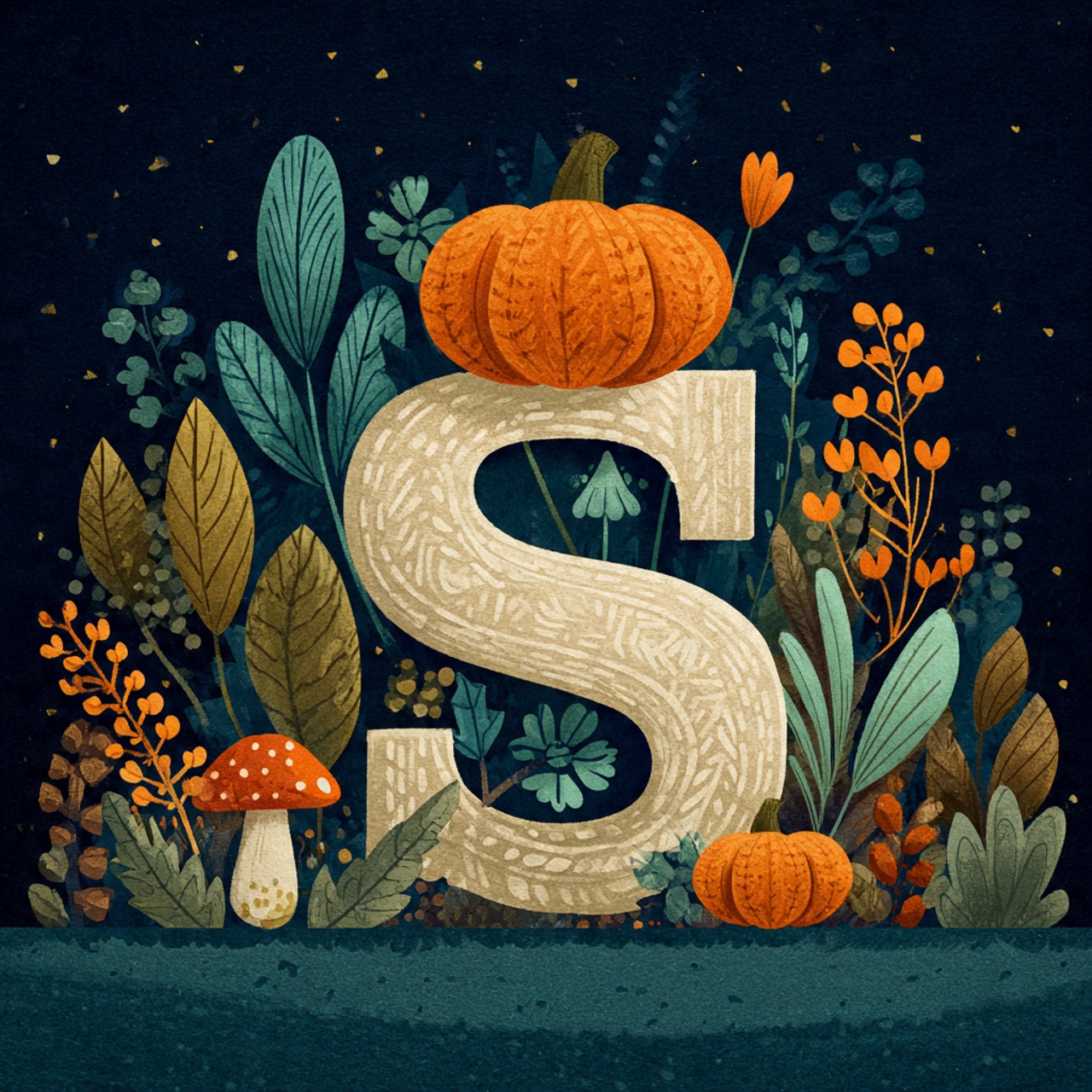
It’s a little like being a modern-day Hester Prynne, except our scarlet letter is a consonant instead of a vowel.
The dreaded S.
For some, singleness is a deliberate choice. For others, it’s the unintended consequence of divorce, disappointment, demanding careers, or simply growing accustomed to a life that no longer includes someone else.
We offer convenient explanations, rehearsed well enough to discourage further inquiry and make navigating a coupled world a little more bearable.
We attend “singles” groups and functions because that’s supposedly where we belong, only to discover that sharing a marital status doesn’t necessarily mean sharing much of anything else.
Some are searching for lifelong companionship. Others are searching for considerably shorter commitments. And still others, like me, aren’t entirely sure what we’re searching for, but suspect we’ll recognize it when we find it.
Perhaps that’s an unfair generalization, but if you’re single with a capital S, you probably understand.
I used to be the life of the party.
My natural gravitational pull was always toward groups rather than individuals. Socially confident and interpersonally comfortable, I could engage an entire room with wit, conversation, and personality well into the night.
I could work a room like a politician in an election year, except I wasn’t asking for votes.
Somewhere along the way, I either lost those skills, abandoned them, or simply grew tired of performing.
Probably all three.
Recovery from drugs taught me, among many other things, how shallow the relentless pursuit of attention can be. I began recognizing the difference between being entertaining and being genuinely connected to others.
Unfortunately, in correcting one extreme, I may have swung the pendulum a little too far in the opposite direction.
The fellow who once couldn’t stand to be alone in a room now sometimes can’t stand being in one with everybody else.
These days, I’m a single man, a bit of a loner, and considerably more introverted than anyone who knew me years ago would believe.
Much of that transformation began with divorce.
When you’ve lived a coupled life, you naturally develop coupled friendships. Your calendar fills with dinners, holidays, parties, vacations, and gatherings with other couples. There are often more social opportunities than hours in the week.
Then, suddenly, you’re single.
Divorce doesn’t merely divide a marriage. It can divide an entire social universe.
Friendships once shared become awkward to maintain. Invitations dwindle. Traditions disappear. Nobody necessarily intends to exclude you, but the dynamics have changed, and you’re no longer quite sure where you fit.
It’s as though an earthquake has opened an enormous crevasse between you and the life you once knew.
Everyone else seems to remain comfortably gathered on the other side while you stand alone on your own little sheet of drifting ice.
And the distance grows.
Which brings me to a Halloween party.
It was a magnificent affair.
The house was fabulously decorated, the costumes were elaborate, the food and music nearly perfect, and the hosts had clearly gone to extraordinary lengths to make everyone feel welcome.
And I had rarely felt more alone.
Well, perhaps not rarely. That might be a touch dramatic.
Exaggerated self-pity is another occasional consequence of living alone. There’s nobody around to roll their eyes and tell you to knock it off.
Making matters worse, the party was populated largely by high school friends I hadn’t seen in decades.
People look remarkably different after forty or fifty years.
Put them in elaborate Halloween costumes, and you’ve effectively eliminated whatever chance you had of recognizing them.
I knew almost nobody.
Those I did recognize were generally the fortunate souls upon whom time, genetics, or accumulated wealth had been particularly generous.
Everyone else might as well have been a complete stranger.
And then there was the final ingredient in my antisocial trifecta.
I was, quite conspicuously, single.
Not merely unattached.
Single with a capital S.
In my increasingly self-conscious imagination, that scarlet consonant was practically glowing on my chest.
I could almost read the imaginary thought bubbles floating above the heads of the happily coupled guests.
“He’s single? At his age?”
“Must have been a terrible divorce.”
“Maybe he’s gay.”
“Perhaps there’s something else wrong with him.”
In my case, I suppose someone could make an argument for all three, depending on how creative they wanted to get.
Of course, nobody actually said any of those things.
They were probably far too occupied enjoying themselves to give my marital status a second thought.
But that’s how an insecure single mind can operate.
We manufacture other people’s judgments, assign them imaginary voices, and then suffer the indignity of believing every word.
Before long, the thought bubbles were popping so loudly in my head that I could barely hear the music.
I began calculating my escape.
Surely I’d stayed long enough to be polite.
Surely my absence wouldn’t be noticed.
Besides, there were a couple of unwatched episodes of The Walking Dead waiting at home, along with a dog who had undoubtedly begun wondering whether I’d been eaten by zombies myself.
The dog, at least, would be delighted to see me.
I left.
Without saying goodbye.
Not exactly the grand exit of a former life-of-the-party fellow, but I suspect nobody noticed the missing entertainment.
The irony wasn’t lost on me.
I had spent years learning how to be comfortable in my own skin, only to discover that I could still feel profoundly uncomfortable wearing it in a room full of people.
And there I was, retreating from actual human companionship to the safety of Facebook, where I could be socially extroverted without the inconvenience of being physically present.
Online, I could still be witty, engaging, thoughtful, and entertaining.
I could carefully compose my thoughts, select my photographs, and enjoy the reassuring little affirmations of people who apparently liked me.
A few dozen likes could momentarily substitute for the companionship I’d just fled.
It’s an odd arrangement, isn’t it?
We sometimes trade opportunities for genuine connection for the comfort of being noticed from a distance.
And if all else fails, I can always post another heartfelt tribute to my dog, complete with photographs documenting the profound emotional bond we’ve developed.
He would have loved the Halloween party, by the way.
I just didn’t have a costume for him.
Sometimes I wish I were a little less introspective.
A little more blissfully ignorant.
But once a therapist, always a therapist.
Years of training and practice have left me with an annoying inability to experience an ordinary social disappointment without mentally dragging myself onto the couch for an unsolicited session.
I can identify the defense mechanisms, recognize the distorted thinking, trace the emotional history, and explain the behavior with considerable professional confidence.
And still do it all over again.
Knowing why you behave a certain way, I’ve discovered, is not the same as knowing how to stop.
Writing stories like this has become a kind of self-therapy. I put the uncomfortable things into words, hoping that by examining them honestly, I might understand them a little better.
And perhaps someone else, quietly wearing the same scarlet consonant, will recognize a little of themselves.
Don’t misunderstand me.
I’ve grown up.
I don’t spend my days wandering around forlorn, feeling sorry for myself, or prowling the neighborhood in search of a partner.
There are many things about being single that I genuinely enjoy.
I appreciate my independence, my solitude, my freedom to arrange a day without consultation, and the quiet pleasures of a life that belongs entirely to me.
I’m not desperately unhappy.
I’m not incomplete.
I’m not waiting for someone else to arrive and make my life worthwhile.
But I do get lonely.
Sometimes unexpectedly.
Especially when I observe couples who’ve spent decades growing older together, sharing histories, weathering disappointments, and collecting memories that belong to nobody else.
There’s something deeply appealing about having someone beside you at the end of an ordinary day.
Someone who knows the stories behind your stories.
Someone with whom you can discuss absolutely nothing and somehow make it feel like everything.
Someone who knows when you’re being ridiculous and loves you enough to say so.
I’ve tried, with mixed success, to develop the kind of spontaneous friendships that make an occasional dinner, movie, or party feel natural rather than like an expedition into unfamiliar territory.
But friendships in later life don’t always develop as effortlessly as they did when we were young.
People have spouses, families, routines, obligations, and established circles of friends.
It’s not that there’s no room for one more.
Sometimes it’s simply that nobody thinks to make room.
And here’s something I’ve come to understand about invitations.
For those of us living uncoupled lives, the invitation itself can mean more than the event.
Being remembered matters.
Being included matters.
Knowing somebody thought of you while making plans matters.
Sometimes it’s enough just to know you were wanted there, even if you ultimately decide to stay home.
Because being single isn’t necessarily about wanting someone to love.
Sometimes it’s simply about wanting to know you haven’t become invisible.
I thought about all of this the morning after that Halloween party.
There was something almost comical about having spent Saturday night surrounded by ghosts, goblins, witches, and assorted monsters, only to realize that the most frightening thing in the room had been my own imagination.
Nobody had rejected me.
Nobody had asked me to leave.
Nobody had pinned a scarlet S to my chest.
I’d done all of that myself.
And perhaps that was the most uncomfortable revelation of all.
I’d gone to a party expecting to feel like an outsider, and then interpreted nearly everything around me as confirmation that I was one.
I had become both the accused and the judge.
And I’d convicted myself before the evening had even begun.
Sunday morning arrived, as it always does, with a little more perspective.
I was still single.
Still living alone.
Still occasionally wishing there were someone with whom to share the small, inconsequential moments that make up most of a life.
But I was also reminded of something far more important.
Loneliness is a feeling, not an identity.
Being alone is a circumstance, not a character flaw.
And singleness is a description of a relationship status, not a measure of a person’s worth.
Hester Prynne was made to wear her scarlet A so the world would know what she had supposedly done wrong.
I had been wearing my scarlet S so the world would know what I imagined was wrong with me.
The difference, of course, is that nobody had sewn mine onto my clothing.
I’d been carrying it around in my own head.
And unlike poor Hester, I could take mine off whenever I chose.
That Halloween party reminded me how easily we can become prisoners of labels, particularly the ones we give ourselves.
And that Sunday morning reminded me of something else.
Though I may sometimes be lonely, I am never entirely alone.
My faith assures me of that, even when my feelings suggest otherwise.
There is a difference between being without a partner and being without love. A difference between having an empty chair beside you and having an empty life.
I’ve been blessed with far too much of the latter’s opposite to confuse the two.
So perhaps the next time I’m invited to a party, I’ll stay a little longer.
Maybe I’ll introduce myself to a stranger.
Maybe I’ll stop imagining what everyone else is thinking and give them an opportunity to tell me.
And maybe, just maybe, I’ll remember that I was invited because somebody wanted me there.
Not as half of a couple.
Not as a prospective partner.
Not as a man with a complicated past or an uncertain future.
But simply as myself.
After all, Hester Prynne never deserved the shame of her scarlet letter.
And neither do I.
Mine just happens to be a consonant.